

Top 10 Unique Experiences in Iceland
October 15, 2026
Top 10 Unique Experiences in Iceland
October 15, 2026
Seeing Iceland’s landscapes from a distance is only half the story. Some of the most memorable and unique experiences in Iceland happen when you go beneath the lava, step onto a glacier, or snorkel through a rift fissure. Rather than simply ticking off must-see attractions, these experiences bring you closer to the forces that have shaped the island. From volcanic geology and geothermal energy to local traditions, they offer a more interactive way to discover Iceland’s nature and culture.
What Makes an Experience Uniquely Icelandic?
The most worthwhile unique things to do in Iceland tend to do one or more of the following:
- Make geology more accessible.
- Show how Icelanders use natural resources in daily life.
- Provide access to landscapes you cannot explore alone.
- Offer new ways to experience familiar scenery.
- Showcase seasonal phenomena in Iceland.
Some of the most memorable things you can only do in Iceland are highly location-specific. Others are familiar activities given a distinctly Icelandic setting by the country’s geology, climate, or culture.
An activity does not have to be physically demanding or high-adrenaline to feel special. Many memorable Iceland experiences focus on geothermal bathing, food, agriculture, or cultural traditions. That makes them well suited to travellers who want to explore the country in a more immersive but accessible way.
1. Descend Inside a Dormant Volcano
Few Iceland volcano tours compare with stepping inside the magma chamber of Þríhnúkagígur. For many visitors, descending into this dormant volcano is one of the once-in-a-lifetime experiences an Iceland trip can provide.
When you go inside a dormant volcano, it is more than just looking down into a crater from above. Instead, visitors board an open cable lift and descend approximately 120 metres (394 feet) directly into the cavity where magma once collected. Inside, mineral-stained rock walls reveal traces of the geological forces that shaped the island thousands of years ago.
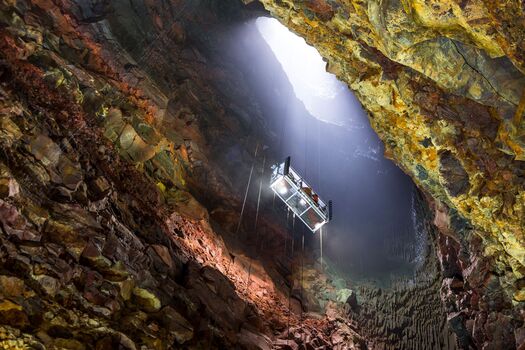
Access is guided and seasonal, typically running from May to October. The tour also involves a hike across lava fields to reach the crater opening. Travellers should check mobility and fitness requirements before booking. It stands out among unique tours in Iceland because it provides practical access to a volcano.
2. Walk Through an Ancient Lava Tunnel
Exploring a lava tunnel reveals how molten rock once moved beneath the surface. During an eruption, lava can continue flowing beneath a crust that has already cooled and hardened. When the supply of molten rock eventually stops, the remaining lava drains away, leaving behind a hollow tube.
Visitors can follow lit walkways through the underground passages to see the different colors, textures, and rock formations. Raufarhólshellir, a short drive from Reykjavík, is a lava tunnel formed during a volcanic eruption roughly 5,000 years ago.
Because it is sheltered from the weather and close to the capital, Raufarhólshellir is a practical year-round option. It’s well-suited for travellers seeking unique tours in Iceland without committing to a long journey. From Reykjavík, you can explore an Icelandic lava tunnel comfortably as a day trip.
3. Step Onto a Living Glacier
Seeing glaciers from afar is common on a trip to Iceland, but standing on the ice offers a completely different perspective. Glaciers are active, moving bodies of ice, shaped by pressure, meltwater, and constant movement. Their surfaces can include crevasses, ridges, and channels carved by flowing water.
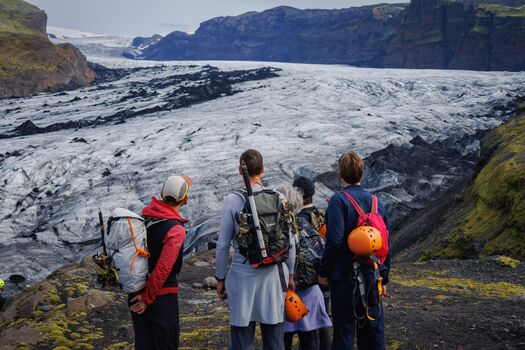
Guided glacier walks, such as the Sólheimajökull hike along the South Coast, allow travellers to explore this environment safely. Equipment such as crampons, helmets, and ice axes is provided, while professional guides lead the route and explain the features around you. Glacier terrain should not be explored without proper guidance, as hidden crevasses and changing conditions can be dangerous.
Beginner-friendly tours require no previous technical experience, making Iceland glacier experiences accessible to most visitors. They offer a practical way to experience the ice up close while learning how glaciers move and change over time.
4. See What’s Inside a Glacier by Entering One
Another of the ice-related unique experiences in Iceland is venturing inside a glacier. While a glacier walk reveals the surface, ice tunnels and naturally formed ice caves offer a different perspective from within.
From the surface, you can appreciate a glacier’s scale and its relationship with the surrounding landscape. As you walk through the cave, you can see shades of blue in the thick ice around you. Man-made ice tunnels, such as those inside Langjökull, provide access to the glacier interior throughout the year. Natural ice caves, such as those in Vatnajökull National Park, form and change with seasonal conditions and are generally explored during winter.
Entering a glacier adds another dimension to your explorations, allowing you to see the ice from both above and within. It is also the kind of adventure activities in Iceland that would be difficult to undertake safely without specialist guidance.
5. Witness How Iceland Grows Food Using Geothermal Energy
Visitors frequently encounter geothermal energy as steam rising from the ground in a geothermal area. But Icelanders also harness that energy in daily life. Exploring a geothermal greenhouse on Golden Circle is one of the more educational Iceland geothermal experiences, showcasing the island’s self-sufficiency and ingenuity.
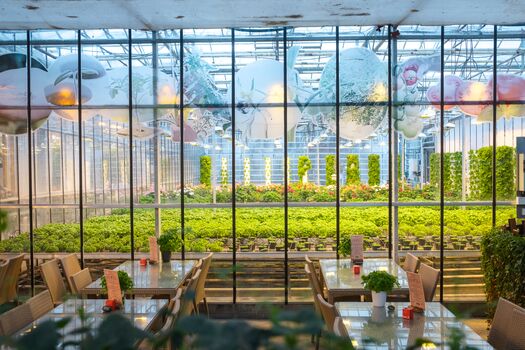
Located along the Golden Circle route, Friðheimar uses geothermal water to heat its greenhouses. This allows tomatoes to grow throughout the year despite Iceland’s cool climate and dark winter days. Artificial lighting, powered by renewable electricity from hydro and geothermal sources, provides additional light when needed. Imported bumblebees pollinate the tomato plants. Together, these methods create growing conditions in a climate where outdoor tomato cultivation is naturally limited.
6. Soak in Geothermal Water Surrounded by the Landscape
In Iceland, geothermal bathing is deeply woven into local culture and everyday life. The Blue Lagoon is the country’s best-known example. However, there are many geothermal baths where travellers can experience this tradition in a more varied setting.
Much of Iceland’s bathing water is naturally heated underground before being channelled into pools and lagoons. Depending on the location, these geothermal pools may overlook coastlines, mountain ranges, lava fields, or valleys.
A geothermal lagoon experience lets travellers connect with Iceland’s geology in the most relaxing way. There are plenty of options, including the newly opened Reykjaböð Hot Springs in Hveragerði near the geothermal valley of Reykjadalur. The wellness retreat combines natural hot springs, a Nordic-style bathhouse, and views across the surrounding volcanic hillsides.
7. Cross the Landscape on an Icelandic Horse
Riding an Icelandic horse across valleys, farmland, or lava fields is among the most unique experiences in Iceland. The breed developed in relative isolation after the Norse settlement of Iceland more than a thousand years ago. Strict biosecurity rules prohibit the import of horses, and Icelandic horses that leave the country are not allowed to return.
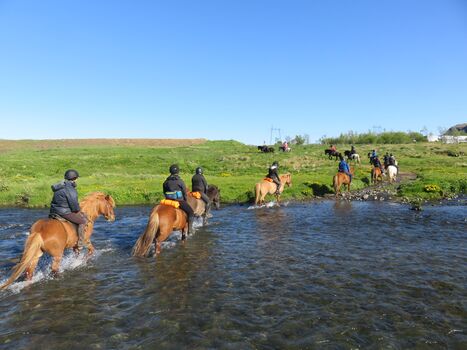
Icelandic horses are known for their small stature, variation of gaits, and generally calm temperament. Most notably, the breed has five gaits, including the tölt, a smooth four-beat gait well suited to travelling over uneven ground.
Many horseback riding centres near Hveragerði and Reykjavík offer gentle excursions suitable for beginners as well as more experienced riders. Riding through the countryside at this slower pace gives travellers a different perspective on the landscape. Additionally, enjoying one of the most memorable things to do in Iceland also introduces travellers to an animal tied to Icelandic history.
8. Taste Bread Cooked by the Earth
Icelandic resourcefulness extends into the kitchen. At places like Laugarvatn Fontana, visitors can witness traditional geothermal baking first-hand.
Geothermal rye bread (hverabrauð) is baked using heat from the ground. Dough is placed inside sealed containers and buried in geothermally heated sand near the edge of Lake Laugarvatn. After cooking for approximately 24 hours, the bread emerges dense, dark, and sweet.
Visitors can watch the bread being dug from the ground before sampling it warm, usually served with Icelandic butter. It is a simple but memorable way to experience Iceland’s geothermal landscape and food traditions.
9. Choose One Experience You Would Not Normally Book
Some of the most remarkable Iceland bucket list experiences involve activities you might never consider elsewhere. Iceland’s location and geology make it uniquely suited for certain pursuits. Snorkelling at Silfra, within Þingvellir National Park, is a prime example, voted among the top bucket-list experiences globally by TripAdvisor travellers.
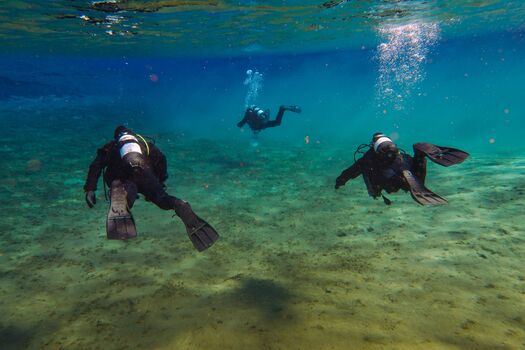
Silfra is a fissure within Þingvellir’s wider tectonic rift zone, where the North American and Eurasian tectonic plates are pulling apart. Glacial meltwater from Langjökull travels underground through porous volcanic rock for decades before reaching the fissure. This natural filtration process leaves the water exceptionally clear, with visibility of around 100 metres (328 feet).
Wearing specialised dry suits to protect against water temperatures of around 2–4°C (35–39°F), participants float through the clear freshwater fissure. Guided access and equipment make this environment accessible. For travellers who would not normally think of snorkelling in near-freezing water, a Silfra snorkelling tour offers one of the most unique experiences in Iceland.
10. Chase the Northern Lights Rather Than Waiting for Them
Seeing the northern lights is a high priority for many winter visitors, but actively searching for them creates a different experience. Rather than waiting outside your hotel and hoping for clear skies, joining a dedicated northern lights tour from Reykjavík gives you the benefit of local knowledge, transport, and flexible route planning.
Aurora visibility depends on factors including solar activity, cloud cover, and darkness. Experienced guides monitor weather forecasts and cloud movements each evening, then choose viewing locations away from Reykjavík’s light pollution. Destinations can change from night to night depending on conditions.
The search itself can take you into quiet countryside areas that may be difficult to reach comfortably on unfamiliar winter roads. With transport and local guidance, travellers can focus on the experience without having to plan routes or assess conditions themselves.
How to Build a Trip Around Unique Experiences in Iceland
When planning a trip to Iceland, you do not need to build an entire itinerary around unusual activities. For most first-time visitors, the easiest approach is to combine one or two distinctive experiences with Iceland’s better-known sightseeing routes.
Several options fit naturally into trips from Reykjavík. A geothermal greenhouse can be added to a Golden Circle day, while glacier walking pairs well with a South Coast journey. Lava tunnels, Icelandic horse riding, geothermal bathing, and Silfra snorkelling are also within relatively easy reach of the capital.
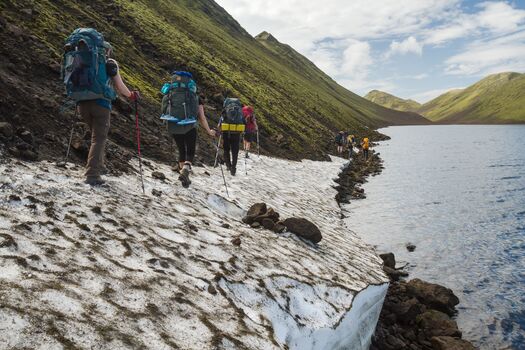
Seasonality matters too. For instance, northern lights tours are limited to the darker months. Some volcano and glacier experiences operate only during particular seasons or under suitable conditions. Make sure to check availability before finalising your itinerary.
Many of these activities also require specialist equipment, guided access, or transport. For travellers staying in Reykjavík, organised excursions can make it easier to include unusual experiences even without a rental car.
See More Than the Famous Side of Iceland
Famous landmarks such as waterfalls and basalt columns remain worthwhile stops on any Iceland itinerary. But some of the most memorable moments come from going beyond sightseeing and interacting closely with the landscapes around you. From stepping onto and inside glaciers to tasting food cooked using geothermal heat, these Icelandic activities reveal different sides of the country.
Reykjavík is a convenient base for many of the unique experiences in Iceland. With transport, equipment, and professional guidance, travellers can experience places that might otherwise be difficult to reach or explore independently.
FAQs
What are the most unique experiences in Iceland?
Some distinctive Icelandic activities include descending into a dormant volcano, walking through ancient lava tunnels, and walking on glaciers. Other unusual experiences include snorkelling at Silfra, riding Icelandic horses, and seeing how geothermal energy is used in everyday life.
What are things you can only do in Iceland?
Some experiences are highly specific to Iceland, while others are familiar activities shaped by the country’s unusual geology and culture. Descending into Þríhnúkagígur’s magma chamber, snorkelling through the Silfra fissure, visiting geothermal greenhouses, and riding Icelandic horses are good examples.
What unique experiences can you do from Reykjavík?
Many unique experiences are within easy reach of Reykjavík. Depending on the season, travellers can visit a lava tunnel, go inside a dormant volcano, snorkel at Silfra, walk on a glacier, ride Icelandic horses, soak in geothermal baths, or join a northern lights tour.
What unique Iceland experiences are available in winter?
Winter visitors can chase the northern lights, explore natural ice caves, walk on glaciers, soak in geothermal pools, and visit lava tunnels. Raufarhólshellir operates year-round, while natural ice-cave access depends on seasonal conditions and safety assessments.
Do you need to be adventurous to enjoy unique experiences in Iceland?
No, many memorable activities are gentle and accessible. Soaking in geothermal lagoons, visiting greenhouse farms, taking lava tunnel walks, and enjoying scenery on horseback don’t require extreme fitness or technical skills.
Do you need a car for unique experiences in Iceland?
No, many guided excursions depart from Reykjavík, and some offer optional pick-up from designated bus stops or selected accommodation. Organised tours can make it easier to reach unusual landscapes without navigating unfamiliar roads or arranging specialist equipment yourself.


Tours in the spotlight


4 Tours
REYKJAVIK EXCURSIONS BLOG
Get inspired by our blog! Information and tips and must see places in Iceland, fun facts, customs and more.


The Silver Circle of West Iceland - Your Guide
You’ve heard of the Golden Circle, but here’s why you should head to Iceland’s western region to explore the msytical Silver Circle tour route.
Read BlogTop 10 Unique Experiences in Iceland
October 15, 2026
Top 10 Unique Experiences in Iceland
October 15, 2026
Seeing Iceland’s landscapes from a distance is only half the story. Some of the most memorable and unique experiences in Iceland happen when you go beneath the lava, step onto a glacier, or snorkel through a rift fissure. Rather than simply ticking off must-see attractions, these experiences bring you closer to the forces that have shaped the island. From volcanic geology and geothermal energy to local traditions, they offer a more interactive way to discover Iceland’s nature and culture.
What Makes an Experience Uniquely Icelandic?
The most worthwhile unique things to do in Iceland tend to do one or more of the following:
- Make geology more accessible.
- Show how Icelanders use natural resources in daily life.
- Provide access to landscapes you cannot explore alone.
- Offer new ways to experience familiar scenery.
- Showcase seasonal phenomena in Iceland.
Some of the most memorable things you can only do in Iceland are highly location-specific. Others are familiar activities given a distinctly Icelandic setting by the country’s geology, climate, or culture.
An activity does not have to be physically demanding or high-adrenaline to feel special. Many memorable Iceland experiences focus on geothermal bathing, food, agriculture, or cultural traditions. That makes them well suited to travellers who want to explore the country in a more immersive but accessible way.
1. Descend Inside a Dormant Volcano
Few Iceland volcano tours compare with stepping inside the magma chamber of Þríhnúkagígur. For many visitors, descending into this dormant volcano is one of the once-in-a-lifetime experiences an Iceland trip can provide.
When you go inside a dormant volcano, it is more than just looking down into a crater from above. Instead, visitors board an open cable lift and descend approximately 120 metres (394 feet) directly into the cavity where magma once collected. Inside, mineral-stained rock walls reveal traces of the geological forces that shaped the island thousands of years ago.
Access is guided and seasonal, typically running from May to October. The tour also involves a hike across lava fields to reach the crater opening. Travellers should check mobility and fitness requirements before booking. It stands out among unique tours in Iceland because it provides practical access to a volcano.
2. Walk Through an Ancient Lava Tunnel
Exploring a lava tunnel reveals how molten rock once moved beneath the surface. During an eruption, lava can continue flowing beneath a crust that has already cooled and hardened. When the supply of molten rock eventually stops, the remaining lava drains away, leaving behind a hollow tube.
Visitors can follow lit walkways through the underground passages to see the different colors, textures, and rock formations. Raufarhólshellir, a short drive from Reykjavík, is a lava tunnel formed during a volcanic eruption roughly 5,000 years ago.
Because it is sheltered from the weather and close to the capital, Raufarhólshellir is a practical year-round option. It’s well-suited for travellers seeking unique tours in Iceland without committing to a long journey. From Reykjavík, you can explore an Icelandic lava tunnel comfortably as a day trip.
3. Step Onto a Living Glacier
Seeing glaciers from afar is common on a trip to Iceland, but standing on the ice offers a completely different perspective. Glaciers are active, moving bodies of ice, shaped by pressure, meltwater, and constant movement. Their surfaces can include crevasses, ridges, and channels carved by flowing water.
Guided glacier walks, such as the Sólheimajökull hike along the South Coast, allow travellers to explore this environment safely. Equipment such as crampons, helmets, and ice axes is provided, while professional guides lead the route and explain the features around you. Glacier terrain should not be explored without proper guidance, as hidden crevasses and changing conditions can be dangerous.
Beginner-friendly tours require no previous technical experience, making Iceland glacier experiences accessible to most visitors. They offer a practical way to experience the ice up close while learning how glaciers move and change over time.
4. See What’s Inside a Glacier by Entering One
Another of the ice-related unique experiences in Iceland is venturing inside a glacier. While a glacier walk reveals the surface, ice tunnels and naturally formed ice caves offer a different perspective from within.
From the surface, you can appreciate a glacier’s scale and its relationship with the surrounding landscape. As you walk through the cave, you can see shades of blue in the thick ice around you. Man-made ice tunnels, such as those inside Langjökull, provide access to the glacier interior throughout the year. Natural ice caves, such as those in Vatnajökull National Park, form and change with seasonal conditions and are generally explored during winter.
Entering a glacier adds another dimension to your explorations, allowing you to see the ice from both above and within. It is also the kind of adventure activities in Iceland that would be difficult to undertake safely without specialist guidance.
5. Witness How Iceland Grows Food Using Geothermal Energy
Visitors frequently encounter geothermal energy as steam rising from the ground in a geothermal area. But Icelanders also harness that energy in daily life. Exploring a geothermal greenhouse on Golden Circle is one of the more educational Iceland geothermal experiences, showcasing the island’s self-sufficiency and ingenuity.
Located along the Golden Circle route, Friðheimar uses geothermal water to heat its greenhouses. This allows tomatoes to grow throughout the year despite Iceland’s cool climate and dark winter days. Artificial lighting, powered by renewable electricity from hydro and geothermal sources, provides additional light when needed. Imported bumblebees pollinate the tomato plants. Together, these methods create growing conditions in a climate where outdoor tomato cultivation is naturally limited.
6. Soak in Geothermal Water Surrounded by the Landscape
In Iceland, geothermal bathing is deeply woven into local culture and everyday life. The Blue Lagoon is the country’s best-known example. However, there are many geothermal baths where travellers can experience this tradition in a more varied setting.
Much of Iceland’s bathing water is naturally heated underground before being channelled into pools and lagoons. Depending on the location, these geothermal pools may overlook coastlines, mountain ranges, lava fields, or valleys.
A geothermal lagoon experience lets travellers connect with Iceland’s geology in the most relaxing way. There are plenty of options, including the newly opened Reykjaböð Hot Springs in Hveragerði near the geothermal valley of Reykjadalur. The wellness retreat combines natural hot springs, a Nordic-style bathhouse, and views across the surrounding volcanic hillsides.
7. Cross the Landscape on an Icelandic Horse
Riding an Icelandic horse across valleys, farmland, or lava fields is among the most unique experiences in Iceland. The breed developed in relative isolation after the Norse settlement of Iceland more than a thousand years ago. Strict biosecurity rules prohibit the import of horses, and Icelandic horses that leave the country are not allowed to return.
Icelandic horses are known for their small stature, variation of gaits, and generally calm temperament. Most notably, the breed has five gaits, including the tölt, a smooth four-beat gait well suited to travelling over uneven ground.
Many horseback riding centres near Hveragerði and Reykjavík offer gentle excursions suitable for beginners as well as more experienced riders. Riding through the countryside at this slower pace gives travellers a different perspective on the landscape. Additionally, enjoying one of the most memorable things to do in Iceland also introduces travellers to an animal tied to Icelandic history.
8. Taste Bread Cooked by the Earth
Icelandic resourcefulness extends into the kitchen. At places like Laugarvatn Fontana, visitors can witness traditional geothermal baking first-hand.
Geothermal rye bread (hverabrauð) is baked using heat from the ground. Dough is placed inside sealed containers and buried in geothermally heated sand near the edge of Lake Laugarvatn. After cooking for approximately 24 hours, the bread emerges dense, dark, and sweet.
Visitors can watch the bread being dug from the ground before sampling it warm, usually served with Icelandic butter. It is a simple but memorable way to experience Iceland’s geothermal landscape and food traditions.
9. Choose One Experience You Would Not Normally Book
Some of the most remarkable Iceland bucket list experiences involve activities you might never consider elsewhere. Iceland’s location and geology make it uniquely suited for certain pursuits. Snorkelling at Silfra, within Þingvellir National Park, is a prime example, voted among the top bucket-list experiences globally by TripAdvisor travellers.
Silfra is a fissure within Þingvellir’s wider tectonic rift zone, where the North American and Eurasian tectonic plates are pulling apart. Glacial meltwater from Langjökull travels underground through porous volcanic rock for decades before reaching the fissure. This natural filtration process leaves the water exceptionally clear, with visibility of around 100 metres (328 feet).
Wearing specialised dry suits to protect against water temperatures of around 2–4°C (35–39°F), participants float through the clear freshwater fissure. Guided access and equipment make this environment accessible. For travellers who would not normally think of snorkelling in near-freezing water, a Silfra snorkelling tour offers one of the most unique experiences in Iceland.
10. Chase the Northern Lights Rather Than Waiting for Them
Seeing the northern lights is a high priority for many winter visitors, but actively searching for them creates a different experience. Rather than waiting outside your hotel and hoping for clear skies, joining a dedicated northern lights tour from Reykjavík gives you the benefit of local knowledge, transport, and flexible route planning.
Aurora visibility depends on factors including solar activity, cloud cover, and darkness. Experienced guides monitor weather forecasts and cloud movements each evening, then choose viewing locations away from Reykjavík’s light pollution. Destinations can change from night to night depending on conditions.
The search itself can take you into quiet countryside areas that may be difficult to reach comfortably on unfamiliar winter roads. With transport and local guidance, travellers can focus on the experience without having to plan routes or assess conditions themselves.
How to Build a Trip Around Unique Experiences in Iceland
When planning a trip to Iceland, you do not need to build an entire itinerary around unusual activities. For most first-time visitors, the easiest approach is to combine one or two distinctive experiences with Iceland’s better-known sightseeing routes.
Several options fit naturally into trips from Reykjavík. A geothermal greenhouse can be added to a Golden Circle day, while glacier walking pairs well with a South Coast journey. Lava tunnels, Icelandic horse riding, geothermal bathing, and Silfra snorkelling are also within relatively easy reach of the capital.
Seasonality matters too. For instance, northern lights tours are limited to the darker months. Some volcano and glacier experiences operate only during particular seasons or under suitable conditions. Make sure to check availability before finalising your itinerary.
Many of these activities also require specialist equipment, guided access, or transport. For travellers staying in Reykjavík, organised excursions can make it easier to include unusual experiences even without a rental car.
See More Than the Famous Side of Iceland
Famous landmarks such as waterfalls and basalt columns remain worthwhile stops on any Iceland itinerary. But some of the most memorable moments come from going beyond sightseeing and interacting closely with the landscapes around you. From stepping onto and inside glaciers to tasting food cooked using geothermal heat, these Icelandic activities reveal different sides of the country.
Reykjavík is a convenient base for many of the unique experiences in Iceland. With transport, equipment, and professional guidance, travellers can experience places that might otherwise be difficult to reach or explore independently.
FAQs
What are the most unique experiences in Iceland?
Some distinctive Icelandic activities include descending into a dormant volcano, walking through ancient lava tunnels, and walking on glaciers. Other unusual experiences include snorkelling at Silfra, riding Icelandic horses, and seeing how geothermal energy is used in everyday life.
What are things you can only do in Iceland?
Some experiences are highly specific to Iceland, while others are familiar activities shaped by the country’s unusual geology and culture. Descending into Þríhnúkagígur’s magma chamber, snorkelling through the Silfra fissure, visiting geothermal greenhouses, and riding Icelandic horses are good examples.
What unique experiences can you do from Reykjavík?
Many unique experiences are within easy reach of Reykjavík. Depending on the season, travellers can visit a lava tunnel, go inside a dormant volcano, snorkel at Silfra, walk on a glacier, ride Icelandic horses, soak in geothermal baths, or join a northern lights tour.
What unique Iceland experiences are available in winter?
Winter visitors can chase the northern lights, explore natural ice caves, walk on glaciers, soak in geothermal pools, and visit lava tunnels. Raufarhólshellir operates year-round, while natural ice-cave access depends on seasonal conditions and safety assessments.
Do you need to be adventurous to enjoy unique experiences in Iceland?
No, many memorable activities are gentle and accessible. Soaking in geothermal lagoons, visiting greenhouse farms, taking lava tunnel walks, and enjoying scenery on horseback don’t require extreme fitness or technical skills.
Do you need a car for unique experiences in Iceland?
No, many guided excursions depart from Reykjavík, and some offer optional pick-up from designated bus stops or selected accommodation. Organised tours can make it easier to reach unusual landscapes without navigating unfamiliar roads or arranging specialist equipment yourself.
Tours in the spotlight
4 Tours
REYKJAVIK EXCURSIONS BLOG
Get inspired by our blog! Information and tips and must see places in Iceland, fun facts, customs and more.
The Silver Circle of West Iceland - Your Guide
You’ve heard of the Golden Circle, but here’s why you should head to Iceland’s western region to explore the msytical Silver Circle tour route.
Read Blog